





Purandar Technical Education Society’s Pune Cambridge Institute of Management and Computer Application adopts various student centric teaching learning methods for enriching learning involvement. The student-centric process is always encouraged to ensure better outcomes and it includes experiential learning, participative learning, problem solving methodologies etc. all the essential facilities are provided to staff to enhance the development of students. The list of other contemporary methods includes online certifications, ICT enabled teaching, Case study etc. The institute’s continuous efforts related with experimental learning, participative learning and problem-solving methodologies are summarized below:

1) Experiential Learning:
An industrial visit and field visits are organized every year to help students connect
theory with practical education.
Our students complete their internship training in a field where they can learn about
the actual concerns and problems specific to their area of expertise. Under the
direction of the faculty, the work is turned in as a project report, and students gain a
variety of abilities, including analytical, problem-solving, and technical ones.
For programming courses, practicals are held to get real-world knowledge. Students
pick up abilities like logical and critical thinking through practicals.
2) Participative Learning: Purandar Technical Education Society’s Pune Cambridge
Institute of Management and Computer Application uses Participative Learning to encourage
students to actively involve in learning process. The Institute uses many methods for
participative learning like a few given below:
. Group Discussions
. Role Plays
. Class Room Presentations
. Group Activity’s
. Team Building Exercises
. Management Games
Participation in Inter-Institute Competitions
Participation in various committees and cells for organizing various events like seminar conferences
Planning, Participation, and execution of annual social gathering
Workshops are organized by the institution to exhibit technical skills of students.
3) Problem Solving Methodologies: Numerous activities are conducted to expose the
students to the real issues that organizations encounter, fostering the critical thinking,
creativity, and problem-solving abilities required by the business world. Students should be
taught to identify problems and use original thought to solve problems given by commercial
enterprises. Research projects, case analysis and discussion meetings, and other similar
activities are examples.
4) ICT Enabled Teaching Learning: Purandar Technical Education Society Pune
Cambridge Institute of Management and Computer Application of uses a wide range of ICT
tools to generate, communicate, disseminate, store, and manage information.
Through
methods like switching from chalkboards to interactive digital whiteboards and utilizing
teachers' personal smartphones, laptops, or other devices for learning during class time, ICT
has in various circumstances also become essential to the teaching-learning interaction.
These
methods can help students develop progressive thinking abilities, offer them unique and
innovative ways to communicate their understandings, and better prepare them to deal with
the constant technological change in both society and the industry.
The participatory learning environment offered by PTES can also be used to describe types of
cutting-edge learning strategies that are based on the most recent technological
advancements. In the classroom, the professors at our institution alternate between using
chalkboards and smart boards as well as LCD projectors.
Additionally, during the lecture
period, students are encouraged to engage by asking questions and receiving immediate
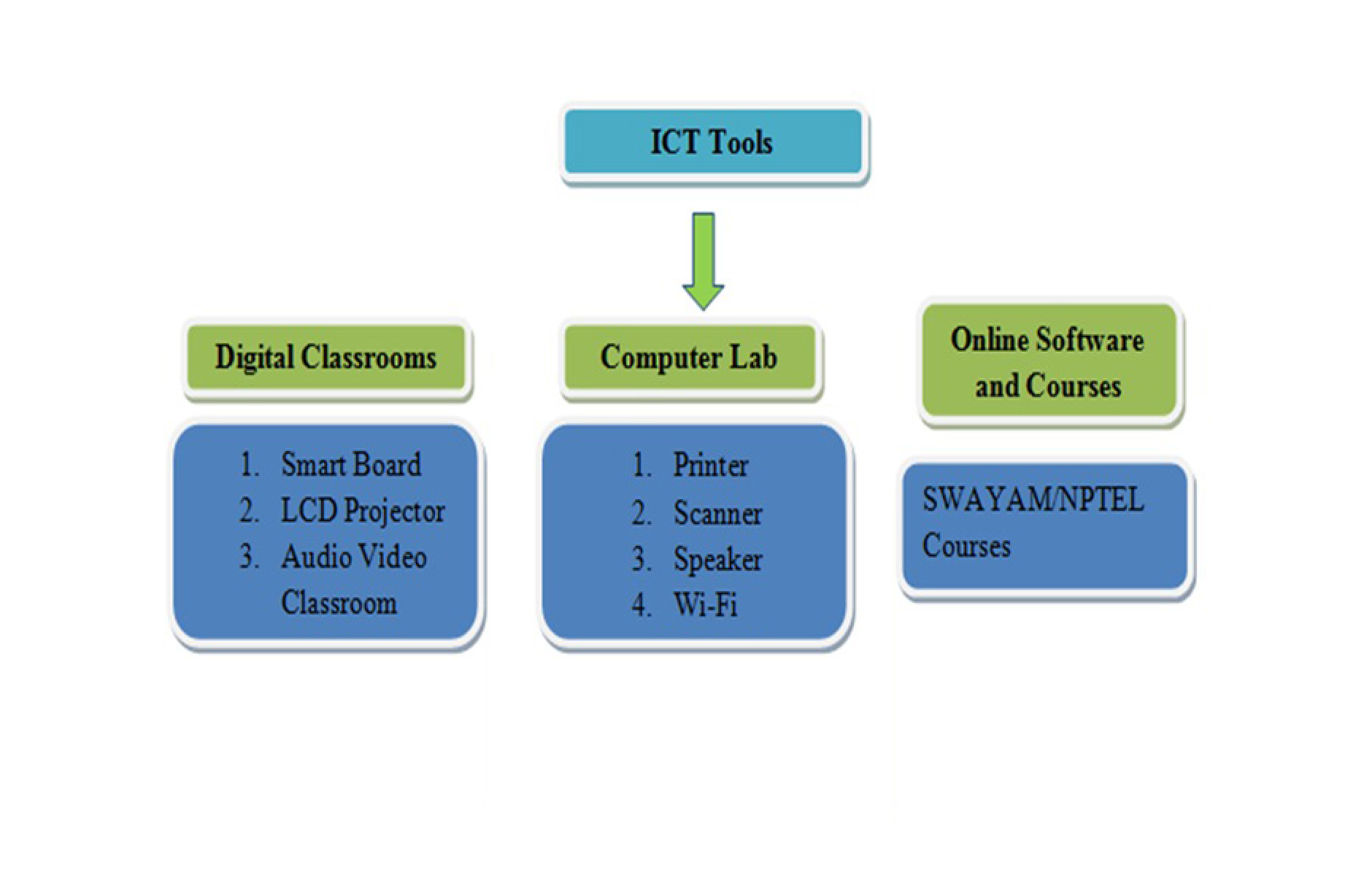
answers. The PTES PCIMCA offers a well-equipped computer lab with more than 50
desktops, 7 printers, 1 server, 20 application software, and modern equipment. The entire
PTES campus has Wi-Fi access.
Two Smart classrooms with audio and video capabilities are available at PCIMCA. This
space is used by the faculty for interactive seminars, classroom instruction, and student
project presentations. Online programs and courses like SWAYAM/NPTEL are also available
to teachers and students.

 +91-9011032856
 admission@pcimca.in